
THE COOKBOOK TEST #113: AMERICA’S TEST KITCHEN TV SHOW COOKBOOK 2001-2026
INSTALLMENT #113 (PAID) Cooking for Engineers / Txoko / Eight Course Tour of America / Chowdah!! / Your Go-To Fried Chicken

Dear Subscribers,
I go back - way back - with Cook’s Illustrated and America’s Test Kitchen. I learned to cook by reading and cooking from The Best Recipe in the early Oughts while living in Boston, having emerged from college incapable of making anything more complicated than a peanut butter and jelly sandwich. [1] The genius of Cook’s Illustrated is that it’s cooking for engineers, and while I may have a writer’s career, I have an engineer’s brain.
Whenever it comes to cooking, I want to know what all the parts are, what they do, how they do it, how they interact, and all about the redundancies and failure points. At the risk of sometimes over-explaining, The Best Recipe cookbook lays out not just ingredients and instructions, but also theory and technique, and by the time you are done cooking the thing, you understood what you’ve done and why, too. The Best Recipe was like a cooking school between two covers.
More than other books, it’s also reasonably foolproof - if you do the steps and buy the right things, your food will turn out well and you’ll be happily fed. When you’re just dipping your toe into cooking, that’s a huge plus - it only takes a couple of expensive messy failures to convince a novice cook that the whole thing is a stupid boondoggle.
So, this week, another exploration of the ATK empire, namely the AMERICA’S TEST KITCHEN TV SHOW COOKBOOK 2001-2026. And through the magic of “other people doing a lot of the work,” we’ve got notes on no fewer than seven different recipes.
at your service,
James
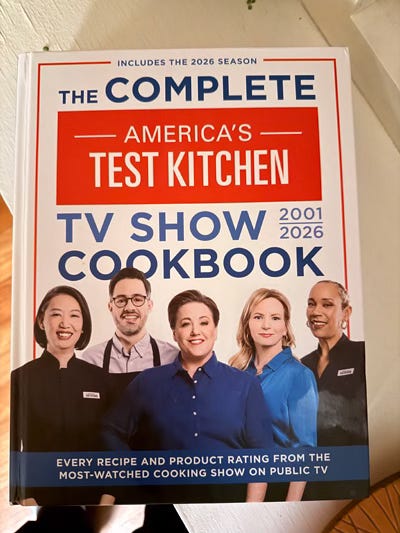
AMERICA’S TEST KITCHEN TV SHOW COOKBOOK 2001-2026
AMERICA’S TEST KITCHEN | 2025 | $24
For the past ten years, I’ve been part of a men’s cooking club here in Minneapolis. We call ourselves the Txoko (after a type of Basque gastronomical society that’s somewhat similar if considerably grander). We get together on a semi-regular basis - let’s call it “quarterly,” although we don’t always get our schedules to sync that regularly.
Each of our meals is run by a captain, a post that rotates through the group. The captain picks the theme, snags the recipes, buys the ingredients, and hosts or finds a site for the dinner. The rest of the group shows up to help cook and, to some extent, drink. One of the non-captain members also brings a hearty lunch to kick off the 5-7 hours of cooking that these things typically include, and another handles cocktails and other libations for the meal so the head chef can keep their head in the game foodwise.
Our most recent meal was a culinary tour of America via the America’s Test Kitchen TV Show Cookbook, and it was a hell of a journey. Curated by my friend Kyle, this single meal managed to hit most of America’s regions, with New England, the South, Texas, California, the Midwest, Alaska, Hawaii, and the Mid-Atlantic at least saluted if not fully included.
It was a terrific tour of one of the world’s most multifaceted cuisines, and I was absolutely stuffed well before it officially concluded. Here’s a take on how the various recipes worked out.
NEW ENGLAND CLAM CHOWDER | Rating: 4 of 5 (“Pretty dang good”)
This is the recipe that I executed from start to finish, and so this is the recipe I’m sharing with this column. I’ve had about a thousand different bowls of clam chowders, but I’m of the opinion that there are really only about three varieties out there:
One: Industry standard.
This is all about cream, cream, and the addition of heavy cream. The clams (which emerge from a can, as God intended) are mostly buried, the potatoes are thoroughly cooked, and the main thing that you notice is the (hopefully correctly seasoned) heavy cream. Honestly not bad, but not really that exciting. This is what you get if you go to Legal Sea Foods, a restaurant chain I still have a lot of affection for years after having left Boston.
Two: “Top of the Hub” Clam Chowder.
I referenced this in an earlier column, and this is my favorite version of this soup - it’s a standard clam chowder that’s greatly enlivened by the addition of tomatoes, which add color, depth, brightness, and acidic tang.
Three: America’s Test Kitchen “Fancy Man” Clam Chowder (see below for recipe).
For poorly defended reasons, this recipe obliges you to go to a quality seafood store and purchase seven pounds of actual clams, which you then steam and painstakingingly shuck, saving the clam liquor in the process. The nice thing about this soup is that while cream is present, it’s only a contributing element to the broth, which has far more seafood character than standard issue chowder.
Bacon, potatoes, and onions also show up with a lot more pizazz and impact, creating a dish that is lighter, more complex, smokier, and generally much more interesting than off-the-rack chowder.
If I make this again, I’m going to try using canned clams, not just for ease of preparation and expense, but because I think the end result will be essentially identical; the ratio of cream to clam broth and the punchy bacon are really key to this, as opposed to freshly steamed clams. Or at least that’s my theory.
All things considered, though, the Top of the Hub rendition is still my favorite.
TEXAS CAVIAR | Rating: 4 of 5 (“Also pretty dang good”)
I’ve heard references to Texas Caviar but never tried it before this meal - it’s a reasonably simple, light, and spicy bean salad that is a delightful companion to tortilla chips, which we fried from chopped up triangles hewn from fresh tortillas. I don’t know that I’d prefer it to a quality homemade tomato-based salsa, but it certainly isn’t a bad way to start a meal.
“SUPER” COBB SALAD | Rating: 2 of 5 (“Would not make again”)
The original salad recipe did not in fact have scare quotes in its title, but it sure should have. A lack of blue cheese dressing or bacon - and the addition of slightly chewy sauteed mushrooms in their place - made this salad taste anemic and underpowered.
I don’t know Cobb salads well enough to say whether kale is a typical green, but I am going to go on the record here and say, at least in this regard, kale is the enemy. It’s too chewy, unyielding and, well … hostile? It really seems to be a vegetable that dislikes people, and the feeling, at least here, is mutual.
HAWAIIAN FRIED CHICKEN | Rating: 4 of 5 (“Delicious, although there’s always something to be said for the classic rendition of this dish”)
I make a seriously good buttermilk fried chicken that has become one of my favorite go-to dishes for entertaining or meal planning for any given week, particularly during the height of summer. Therefore, I understandably (but incorrectly) view any deviation from that recipe as a mistake.
This fried chicken variant uses soy and garlic to produce something like jumbo-sized karaage, and it offers more umami and a juicier piece of meat than standard issue stuff. Accompanying tonkatsu sauce adds a sweet-tart bite, as well. It’s good. I enjoy it. I’m still married to my original recipe. (See below for that recipe, which I really think should be a part of nearly everyone’s life.)
SHRIMP AND GRITS | Rating: 5 of 5 (“Astonishingly good”)
If you ever decide to order and make grits, order them from Anson Mills. Whenever I try grits north of the Mason/Dixon line, I regret it, to the point that I’ve stopped doing it entirely.
The scratch-made Anson Mills grits we made for this recipe are what I remember about the times I’ve gotten legit Southern grits - they’re not gluey or bland, they have a creamy texture that retains fight and interest, and they become a gorgeous playing field for spicy sautéed shrimp. There were a lot of “these are the best shrimp and grits I’ve ever had” comments circulating at the table when these were presented, and I was among the yea-sayers. This is just a superb recipe (available online here.)
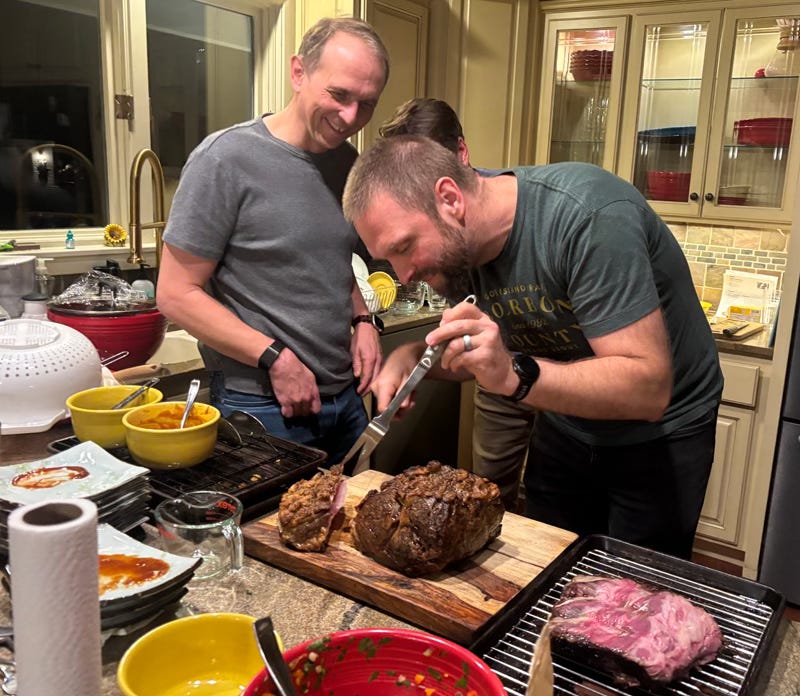
PRIME RIB WITH HORSERADISH SAUCE | Rating: 4 of 5 (“Really quite great with a few kinks I’d want to see worked out somehow”)
I’ve had enough prime rib at supper clubs to be familiar with this Midwestern dinner dreadnought, but it was legitimately interesting to get behind the scenes and clock how similar the preparation felt to some of my favorite Mexican taco meats, namely carnitas and pork al pastor. In short: You get a mammoth piece of meat, you slow-cook it for hours after a marinade, and then you finish it with a broil to crisp up the exterior. Service is the big pivot - rather than presenting taco-ready niblets, you cut slices of meat and serve them with a truly kicky horseradish sauce that completes the dish.
My only complaint: Doing this prime rib as per the recipe yielded a dish that went from perfectly rare to gelatinously “maybe too rare.” Most pieces were good to excellent, however, and we certainly didn’t run out of meat. This would be a perfect holiday centerpiece, particularly if older relatives are going to be part of the crowd.
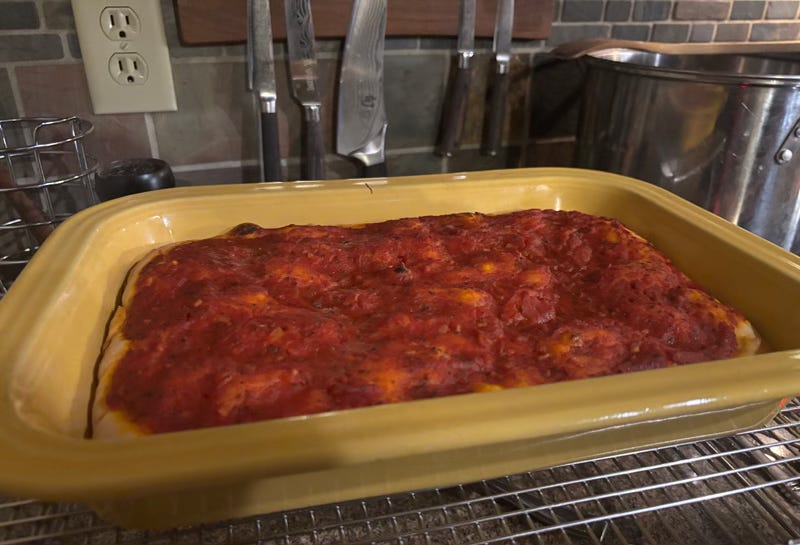
PHILLY TOMATO PIE | 3 of 5 (“Pretty good, I guess, but what is going on with this thing?”
I’ll be the first person to confess that I haven’t had this dish in the wild, and I don’t necessarily understand it. But as far as I can gather: You take a fluffy, focaccia like bread and cover it in a mildly spiced marinara, and then carve it up into something approximating pre-dipped breadsticks. The crumb on the bread was terrific and the marinara tasty, but this also definitely feels like a lot of effort to get to 2/3rds of “pizza.”
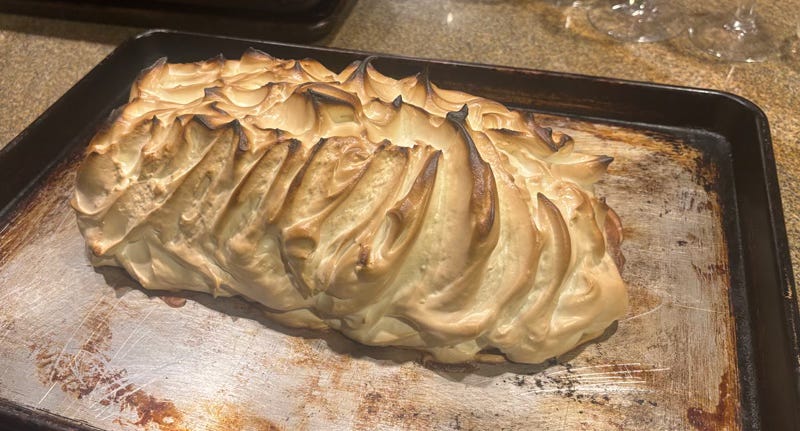
BAKED ALASKA | 5 of 5 (“WHOA MAMA”)
This is one of the great all-time semi-extinct American classic desserts. I’m sure it’s semi-extinct because it’s a royal pain in the ass to construct. You need to saw up cardboard cartons to make a cylinder of ice cream, bake a huge, pliable sheet of sponge cake, measure out the dimensions to enrobe and cap your ice cream cylinder, bring a meringue to stiff peaks, ice your cake log, and then broil the sucker before service. It would take a handsome price tag indeed to make this leviathan worth the effort in a restaurant kitchen, and it’s nearly unworkably challenging in a home kitchen.
And yet: Legitimately spectacular. Coffee ice cream, cold as it comes, wrapped in a thin jacket of chocolate cake, covered in a toasted coat of meringue, all combining to make one of the most indulgent and paradoxical desserts available. It’s really a gorgeous, special, agonizing thing.
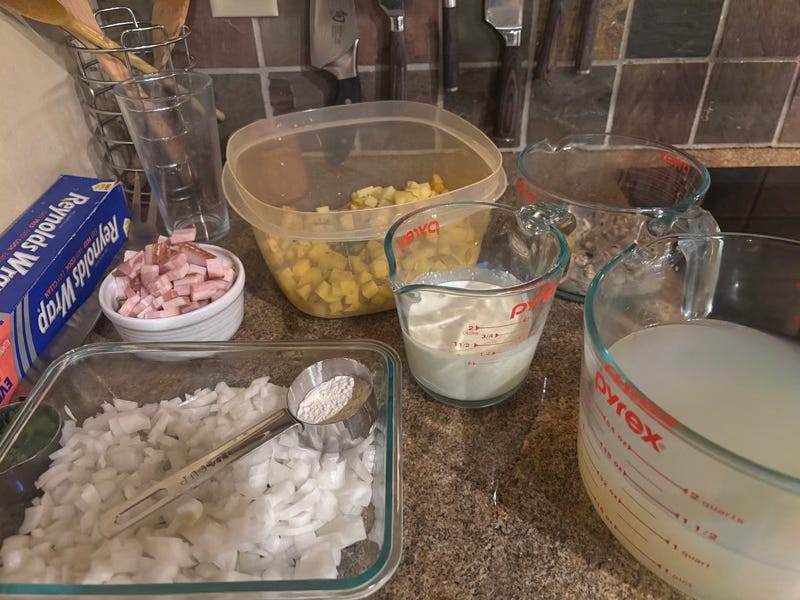
NEW ENGLAND CLAM CHOWDER
7 pounds medium-size hard-shell clams washed and scrubbed clean or 12-13 oz. canned clams with juice
4 slices thick-cut bacon (about 4 ounces), cut into ¼-inch pieces
1 large onion, diced medium (about 2 cups)
2 Tbsp flour
About 1 ½ pounds of thin-skinned potatoes (Yukon Gold, red boiling potatoes, fingerling, etc.), scrubbed and diced medium
1 tsp fresh or 1/4 tsp dried thyme
1 cup heavy cream
2 tablespoons minced fresh parsley leaves
Salt and ground black pepper
If using whole clams: Bring clams and 3 cups water to boil in large covered pot. Steam clams until just open, which can take between 5-15 minutes. Add more water if needed. Pull clams as they open on an ongoing basis, and move to large bowl. Remove clams from shell with a paring knife, then chop. Reserve clam broth and water from pot.
Pour clam broth into 2-quart Pyrex measuring cup, holding back last few tablespoons broth in case of sediment; set clam broth aside. You should have about five cups of broth, top off with water if needed.
If using canned clams: drain and chop clams (reserving juice), and combine clam juice with 5 cups of water.
Rinse and dry pot, then fry bacon over medium-low until fat renders and bacon crisps, 5-7 minutes. Add onion to bacon and saute until softened, about 5 minutes. Add flour, stir about 1 minute. Whisk in reserved clam broth, add potatoes and thyme and simmer until potatoes are tender, about 10-15 minutes. Add clams, cream, parsley and salt and ground pepper to taste and bring to simmer. Remove from heat and serve.
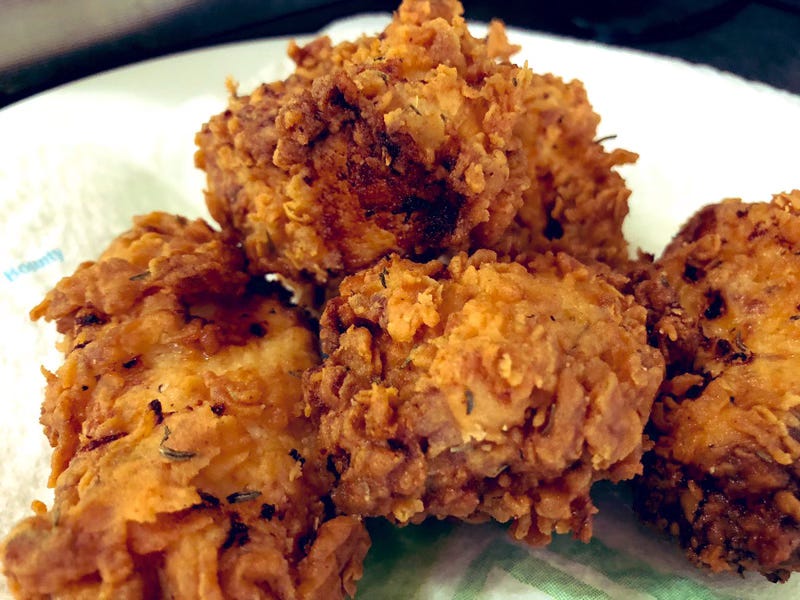
CRUNCHY FRIED CHICKEN
2 cups buttermilk
2 Tbsp salt
About 4 pounds of breast meat only, cut into 2 or 3” strips or chunks or 2 whole chickens (about 7-8 pounds) cut into 16 or so pieces
4 1/2 cups flour
1 Tbsp baking powder
1 1/2 tsp dried thyme
1 1/2 tsp pepper
1 1/2 tsp cayenne
3/4 tsp garlic powder
1 1/2 tsp herbs de Provence, oregano, or other dried herbs
1 Tbsp salt
4-5 cups vegetable shortening, vegetable oil, or peanut oil
Whisk together 2 Cups of buttermilk and the salt in a large bowl until the salt is dissolved. Add the chicken pieces and stir to coat; cover bowl and refrigerate for 1 hour. (And not any longer, or it will get too salty.)
Whisk together flour, baking powder, and spices in large bowl. When your chicken comes out of the fridge, take 6 Tbsp buttermilk from the marinade and rub into the dry ingredients until the mixture resembles coarse sand.
Working in batches, drop the chicken pieces into the batter and turn to thoroughly coat. Shake excess coating off into bowl and then transfer chicken onto wire rack set over a rimmed baking sheet.
Heat oil in deep fryer to 350 F. Fry breast pieces for 5-6 minutes a side, until deep golden brown. For bone-in pieces, 8-10 minutes a side is more typical.
Turn chicken and fry on other side until golden brown, about 6 minutes, maintaining an oil temp of about 315.
Cool chicken on paper towels for 5 minutes before serving.
AMERICA’S TEST KITCHEN TV SHOW COOKBOOK 2001-2026
(***ESSENTIAL / BUY IT*** / BORROW IT / SKIP IT / SCRAP IT)
If you don’t already own any ATK books, this would be a great one to pick up - our eight-recipe tour suggests that its contents are up to snuff for the franchise, which is to say pretty good to excellent, overall. The shrimp and grits and Baked Alaska alone might validate the purchase if you put the time in to execute and master these two beautiful recipes. If you DO own ATK books, you should be aware that there’s a lot of overlap in terms of recipes and approaches, but this one performed well enough in the kitchen that there’d be no harm in buying it, trying it, and regifting it if it were too redundant.
FOOTNOTES
[1] At one point early in my college days I managed to burn spaghetti by putting it into a pot without water. Just a straight-up mid-’80s sitcom level of kitchen stupidity.